
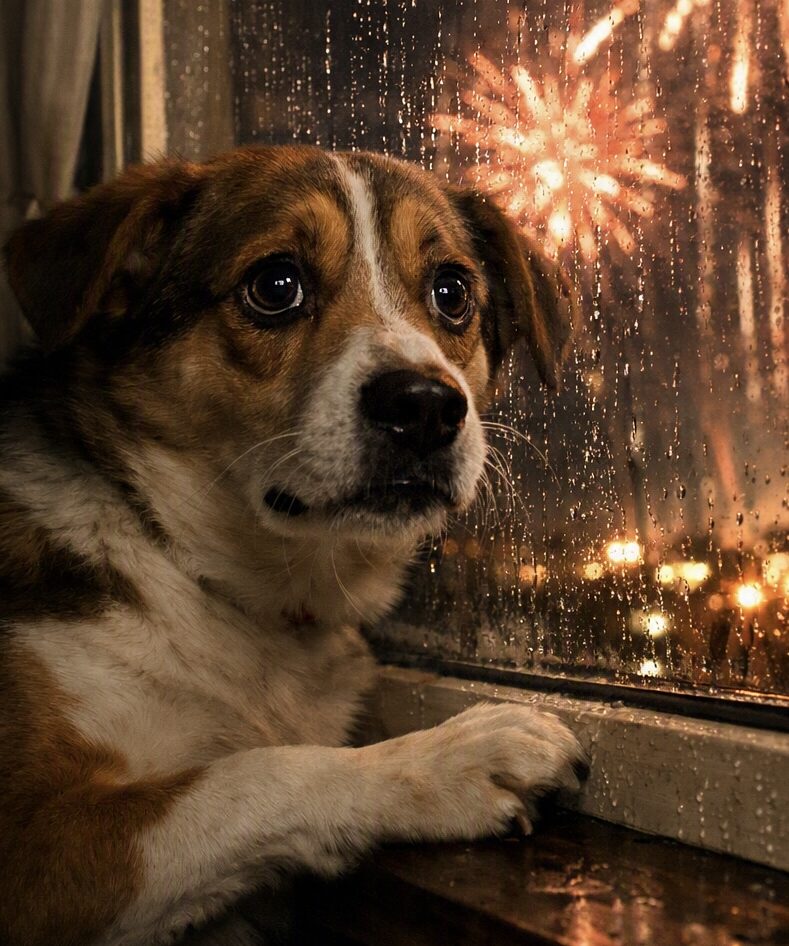
With Bonfire Night approaching, it’s time to talk about the damage fireworks cause to animals, what dog owners can do to help, and why we should all be pushing for changes to the law.
Every year, as we approach November, the same conversations start appearing on social media. Dog owners are dreading the fireworks, people are sharing photographs of frightened pets, and animal welfare organisations are once again calling for tighter restrictions on the sale and use of fireworks.
And every year, we seem to be having exactly the same conversation.
I understand that people enjoy fireworks. They’re colourful, exciting and traditionally associated with celebrations. But I do question whether a few minutes of entertainment justifies the distress they cause to millions of animals, particularly when fireworks can be bought by members of the public and set off unexpectedly in residential areas.
For many dogs, fireworks aren’t simply an unpleasant noise. They can trigger genuine fear and panic, sometimes with consequences that last long after the final bang.
Just how badly do fireworks affect dogs?
According to research highlighted by Dogs Trust, approximately 49% of dogs in the UK are negatively affected by fireworks. PDSA’s Animal Wellbeing Report has also found that 41% of dog owners reported their dog being frightened of fireworks, representing an estimated 4.1 million dogs.
That’s an extraordinary number of animals experiencing fear because of something entirely outside their control.
Fireworks can produce sounds reaching 120 to 175 decibels, according to the RSPCA. Dogs have a much wider range of hearing than humans, and sudden, unpredictable explosions can trigger a powerful fear response.
Some dogs tremble, pant, pace around the house or desperately try to hide. Others bark, become destructive, refuse food or attempt to escape. Some show much more subtle signs, such as becoming unusually quiet, restless or reluctant to go outside.
As a Canine Behaviourist, I think it’s important that owners recognise these behaviours for what they are. A frightened dog isn’t being naughty, attention-seeking or difficult. They’re experiencing an emotional response to something they perceive as threatening.
Repeated exposure can also make matters worse. A dog that initially startles at a loud bang may become increasingly sensitive to noises, particularly when fireworks happen without warning and the dog has no opportunity to escape or recover.
It’s not just dogs that suffer
Cats can become terrified and disappear for hours or even days. Horses may panic, bolt or injure themselves trying to escape. Farm animals can experience significant distress, and wildlife can be disturbed from resting or roosting places.
The RSPCA reports that fireworks can cause stress, injury and even death among animals. Birds, for example, may take flight suddenly in darkness, increasing the risk of collisions and exhaustion.
And we shouldn’t forget the impact on people. Individuals with PTSD, sensory sensitivities and certain medical conditions can also find unpredictable explosions extremely distressing.
The problem isn’t necessarily that people want to celebrate. It’s that their celebrations can have serious consequences for other people and animals who have absolutely no choice about being involved.
Why I support restrictions on the public sale of fireworks
Personally, I would like to see fireworks removed from general public sale, with displays restricted to properly organised, licensed events. That would make firework activity more predictable and give animal owners a realistic opportunity to prepare.
I’m certainly not alone in that view.
Dogs Trust has been campaigning for tighter restrictions on the sale and use of fireworks, while the PDSA called in October 2026 for private use to be restricted in favour of professionally organised, licensed displays. The RSPCA is also campaigning for changes, including quieter fireworks, restrictions on sales and designated firework-free zones.
In July 2026, the Government launched a consultation proposing changes to fireworks legislation, including restrictions on some of the loudest fireworks. That’s an encouraging development, but proposals aren’t the same as legislation, and there is still an opportunity to make our voices heard.
I appreciate that some people believe fireworks should remain available for private celebrations. However, I think we need to consider whether the freedom to set off loud explosives in residential areas should outweigh the welfare of animals and vulnerable people.
We now have alternatives, including drone displays and lower-noise fireworks. Surely we can find ways to celebrate without causing unnecessary suffering.
If you feel strongly about this issue, please consider supporting the organisations campaigning for change, signing an active petition and contacting your MP. I’ve included links at the end of this article.
What can you do to prepare your dog for fireworks?
Although Bonfire Night is close, there are still useful things you can do now. Ideally, preparation should begin months in advance, particularly if your dog already has a significant noise phobia.
Create a safe place. Find somewhere your dog naturally likes to settle, perhaps a quiet bedroom, a corner behind the sofa or an open crate if they’re already comfortable using one. Make it cosy with familiar bedding and allow your dog to come and go freely. Never force a frightened dog into a crate or shut them somewhere they don’t want to be.
Start planning your routine. Find out when organised displays are happening locally and ask neighbours whether they’re planning fireworks. Try to arrange walks earlier in the day and make sure your dog has opportunities to toilet before dark.
Check identification and security. Make sure your dog’s microchip registration details are correct, their collar carries an appropriate ID tag, and your garden, doors and windows are secure. Frightened dogs can behave in ways their owners would never normally expect.
Prepare some enrichment activities. Lickimats, stuffed food toys, snuffle mats and safe chews can help some dogs relax. Experiment now to find out what your dog enjoys, rather than introducing something completely unfamiliar when they’re already frightened.
Speak to your vet if your dog has a history of severe fear. Don’t wait until they’re in a state of panic. There are prescription medications that can help dogs with significant noise-related anxiety, and your vet can advise on an appropriate plan. Medication should never be viewed as a failure or a last resort when an animal is genuinely suffering.
Can you teach your dog not to be frightened?
Yes, in many cases we can improve a dog’s emotional response to fireworks through carefully planned behaviour modification. However, it takes time, and it needs to be done correctly.
Desensitisation involves introducing firework sounds at a level so low that the dog remains comfortable, while counterconditioning aims to build a positive emotional association with those sounds.
This isn’t a case of putting a fireworks recording on YouTube, turning up the volume and hoping your dog gets used to it. Exposing a frightened dog to sounds that overwhelm them can actually make their fear worse.
For puppies, gentle and positive exposure to different sounds can be particularly valuable. For adult dogs with established noise fears, I would recommend a structured programme, ideally starting well before firework season.
With Bonfire Night almost here, the priority for frightened dogs should be management and helping them feel safe, rather than attempting intensive noise training.
What should you do when fireworks are actually going off?
First, make sure your dog is safely indoors before the fireworks begin. Close the curtains, leave some lights on and use familiar background music or television to help reduce the impact of outside noises.
Allow your dog to choose where they want to be. Some dogs prefer to hide somewhere quiet, while others want to sit right next to their owner. If your dog comes to you for reassurance, please give it to them.
You will not reinforce fear by comforting a frightened dog. Fear is an emotional response, not a behaviour that becomes stronger simply because you offer affection. If your dog wants to cuddle up beside you, there’s absolutely nothing wrong with helping them feel safe.
If your dog is relaxed enough to enjoy a stuffed food toy, a game or a little scentwork, that’s great. But don’t force activities on a dog that is clearly distressed. A dog refusing their favourite food may be telling you that they’re too frightened to eat.
Avoid taking your dog into the garden while fireworks are going off. If they genuinely need to toilet, wait for a quieter period and take them out on a lead, even if the garden is enclosed.
Most importantly, don’t punish barking, pacing, accidents in the house or any other fear-related behaviour. Your dog isn’t choosing to be frightened, and punishment will only add to their distress.
We can help our dogs, but we also need to change the bigger picture
There is a great deal we can do to make firework season more manageable for our dogs, but I don’t think the entire responsibility should rest with pet owners.
We can prepare safe spaces, adjust routines, work on behaviour modification and seek veterinary help. What we cannot do is control when somebody decides to let off a firework in the street outside our home.
I believe restricting the public sale of fireworks and encouraging licensed, organised displays would be a sensible step towards protecting animals, while still allowing people to enjoy celebrations.
Until then, please look after your animals, check on neighbours who may be affected, and consider adding your voice to the growing calls for change.
Because no animal should have to spend an evening terrified simply because somebody else wants to celebrate.
Help make a difference
- Support the RSPCA’s campaign for stronger fireworks legislation.
- Support Dogs Trust’s campaign for restrictions on the sale and use of fireworks.
- Sign an active parliamentary petition calling for restrictions on public sales.
- Contact your local MP and explain why this issue matters to you.
If your dog struggles with fireworks or other noise-related fears, please get in touch with me at Dogskool. With over 25 years of experience working with dogs and their behaviour, I can help you understand your dog’s responses and develop a sensible, individual plan to improve their confidence and wellbeing.
Sarah Hursthouse
Canine Behaviourist, Dogskool