
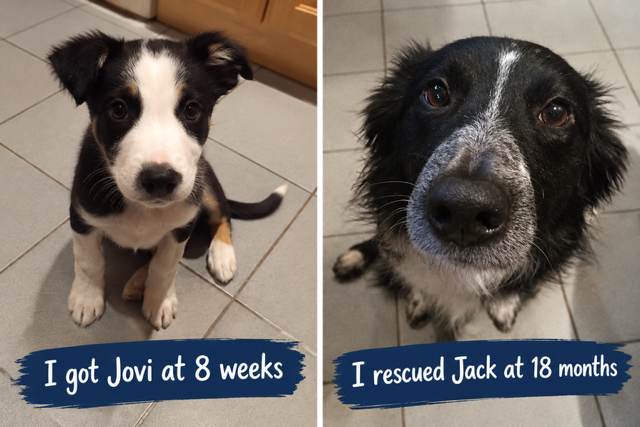
A puppy is a blank canvas, right? And a rescue dog comes with baggage? If only choosing a dog were that simple!
One of the biggest misconceptions I come across in my work as a Canine Behaviourist is that getting a puppy means you can avoid behavioural problems, while adopting a rescue dog means you’re taking on someone else’s mistakes. Neither is necessarily true. I’ve worked with puppies who have been incredibly challenging and rescue dogs who have settled beautifully into their new homes. I’ve also seen the reverse. The reality is that every dog is an individual, and whether you choose a puppy or a rescue, there will be things to consider, challenges to overcome and plenty of rewards along the way.
So, if you’re thinking about welcoming a dog into your life, or you’ve already got one and occasionally wonder whether the grass might have been greener on the other side, let’s look at the pros, cons and a few things that might surprise you.
The Puppy: Cute, Cuddly and Completely Exhausting!
There’s something irresistible about a puppy. Those little paws, the puppy smell, the excitement of watching them discover the world for the first time. Getting a puppy also gives you the opportunity to introduce good habits from an early age, help them develop confidence and build a strong relationship as they grow.
The advantages of getting a puppy
One of the biggest benefits is being able to influence your puppy’s early experiences. Appropriate socialisation, positive training and gentle exposure to everyday life can help them develop into a confident, well-adjusted adult dog. You can introduce routines, establish boundaries and teach important life skills from the beginning. You’ll also have the pleasure of watching their personality develop, although you might discover that the quiet little puppy you brought home has rather different ideas about life once adolescence arrives!
The challenges nobody should underestimate
Puppies are hard work. Toilet training can mean interrupted nights, accidents on the carpet and standing in the garden in your dressing gown at 5am wondering why your puppy is more interested in eating leaves than having a wee. Then there’s biting, chewing, jumping up, pulling on the lead and learning to be comfortable when left alone. Even puppies from responsible breeders can develop behavioural difficulties, and genetics, early experiences, health and individual temperament all influence how a puppy develops. Getting a puppy doesn’t guarantee that you’ll avoid problems later.
Adolescence can be particularly challenging. That lovely recall you’ve worked so hard on might suddenly become unreliable, your puppy may become more interested in other dogs than you, and previously manageable situations can become difficult. This doesn’t mean your training has failed. It means your young dog is developing and needs continued support.
My practical tips for puppy owners
- Start teaching independence early, with very short, positive periods of separation rather than waiting until your puppy needs to be left for several hours.
- Prioritise quality socialisation over quantity. Your puppy doesn’t need to greet every dog or person. Learning to observe the world calmly is just as valuable.
- Reward the behaviours you want to see repeated, including settling quietly, checking in with you on walks and keeping four paws on the floor.
- Don’t overlook sleep. Overtired puppies can become particularly bitey, excitable and difficult to manage.
- Keep training short, enjoyable and appropriate for your puppy’s age. Consistency matters far more than lengthy sessions.
The Rescue Dog: A New Beginning, Not Necessarily a Problem Dog
Rescue dogs sometimes get a rather unfair reputation. There’s an assumption that they’ve ended up in rescue because something is wrong with them, but dogs need new homes for all sorts of reasons. Changes in family circumstances, illness, bereavement, financial difficulties and housing problems can all lead to perfectly lovely dogs needing somewhere new to live.
Of course, some rescue dogs have experienced neglect, poor socialisation or frightening situations. Others may have lived in loving homes and simply found themselves needing a fresh start.
The advantages of adopting a rescue dog
With an adult rescue dog, you may already have a clearer idea of their size, energy levels and general temperament. Some will have lived in homes before and may already understand toilet training, walking on a lead and everyday household routines. If you’re not particularly enthusiastic about the puppy biting and toilet training stages, an adult dog could be a wonderful choice.
A good rescue organisation will also try to match dogs with suitable homes, taking into account their individual needs and the experience of prospective owners. Some dogs settle remarkably quickly and become wonderful companions without requiring extensive behavioural work.
The challenges to consider
One of the biggest challenges can be not knowing a dog’s complete history. You may have limited information about their previous experiences, health or how they respond to particular situations. Even when a rescue dog has been assessed in kennels or a foster home, their behaviour may change once they’re living in a different environment.
Some dogs may struggle with being left alone, unfamiliar people, other dogs or particular noises. Others might appear very quiet initially, only to become more confident and energetic as they settle in. This isn’t necessarily a sign that they’ve suddenly developed a problem. They may simply be starting to feel comfortable enough to express themselves.
It’s also important not to assume that every behavioural difficulty in a rescue dog is the result of past abuse. Pain, genetics, temperament, inadequate socialisation and current experiences can all contribute to behaviour, regardless of where a dog came from.
My practical tips for rescue dog owners
- Give your dog time and space to settle. Avoid filling the first few weeks with visitors, outings and exciting experiences.
- Establish predictable routines for meals, walks, rest and everyday activities. Predictability can help dogs feel more secure.
- Let your dog approach new people and situations at their own pace rather than encouraging or forcing interactions.
- Observe their body language carefully. Turning away, freezing, lip licking and avoiding contact can all indicate discomfort.
- Arrange a veterinary health check and seek professional behavioural support if you notice persistent anxiety, aggression or difficulty coping with everyday life.
So, Which Is Easier?
Here’s something worth remembering: a well-matched adult rescue dog may be easier to live with than a puppy, while a puppy may present challenges that continue well into adulthood.
Equally, a rescue dog with complex behavioural needs may require considerable time, patience and specialist support. Neither option comes with guarantees.
What matters far more than whether your dog came from a breeder or a rescue centre is whether their individual needs are compatible with your lifestyle. Think about how much time you have, your daily routine, your experience with dogs, your home environment and what you’re realistically prepared to manage.
And don’t choose a dog purely because you love the way they look! Breed tendencies, energy levels, temperament and exercise requirements can make a huge difference to how successfully a dog fits into your life.
The One Thing Every Dog Owner Has in Common
Whether your dog arrived as an eight-week-old puppy, a six-month-old adolescent or a ten-year-old rescue, they all need the same foundations: patience, understanding, appropriate training, physical and mental enrichment, and the opportunity to feel safe.
A puppy isn’t automatically a blank canvas, and a rescue dog isn’t automatically damaged. Both bring their own personalities, needs and challenges. Both can become fantastic companions, and both can occasionally make you question your life choices!
After more than 25 years working with dogs and their owners, one thing I can say with confidence is that the relationship you build with your dog matters far more than the route they took into your home.
Need a Little Help With Your Dog?
Whether you’re navigating puppy biting, toilet training and recall, or helping a rescue dog settle into their new life, I can help you understand your dog’s behaviour and work towards practical, positive solutions.
Explore my 121 Puppy Packages, my Essential Obedience online course, or my ebooks OMG Help Me With My Puppy! and OMG Help Me With My Rescue Dog!, both just £10.
For individual behavioural challenges, my 60 Minute Problem Solver offers personalised online advice for £49!
And I’d love to know: did you choose a puppy or a rescue dog, and did the experience turn out quite how you expected?